The Journey to Lakayro
How one educator's lifelong relationship with dance became a movement to keep Haitian and Afro-Diasporic culture alive — and to make sure the next generation never has to search for a home that sees them.
Lakayro did not begin as an organization. It began as a feeling — the kind that settles in when a child watches their family move to music at a gathering and understands, before they have words for it, that something important is being passed down. For Yvana Romelus, that feeling arrived early and never left.
Dance was never an extracurricular for her. It was a language. It was the way her household spoke about where it came from, what it had survived, and what it still carried. Growing up Haitian-American, she learned that movement could hold memory — that a single rhythm could carry the weight of a history books often leave out. That early understanding would, years later, become the reason Lakayro exists.
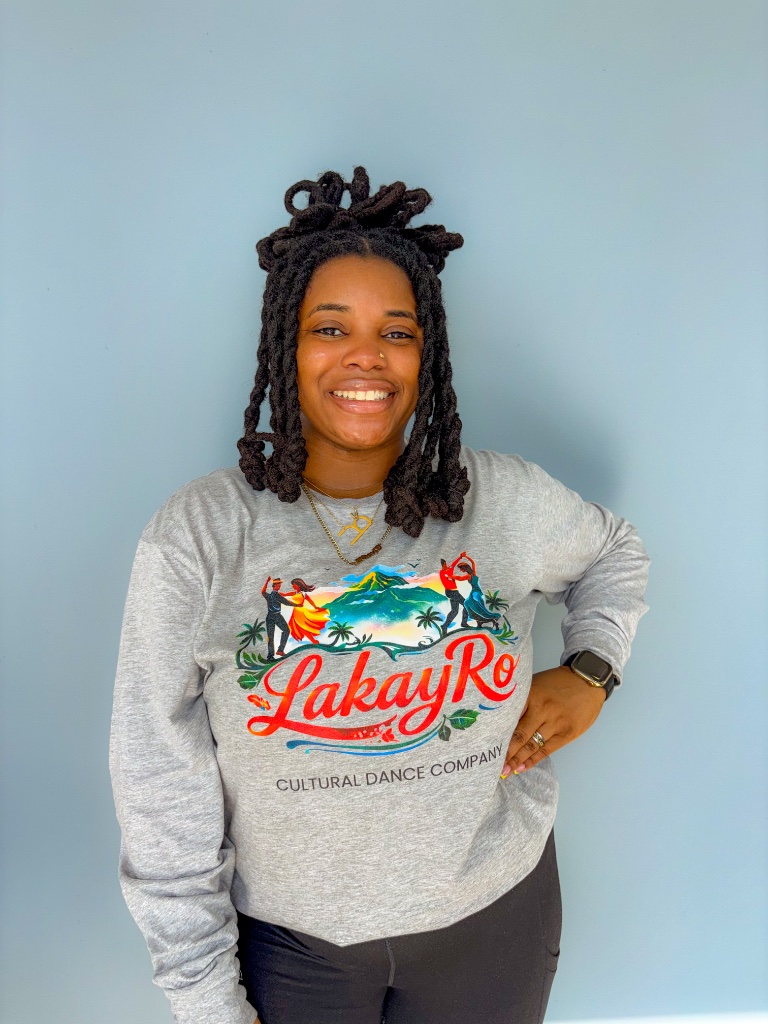
"I did not set out to build a nonprofit. I set out to build the place I wished had existed for me."
Haitian Culture Is the Foundation
Haitian culture is one of resilience. It is a culture that carried itself through revolution, displacement, and rebuilding — and that did so in part through its art, its music, and its dance. To grow up inside that culture is to inherit a deep sense of pride and a responsibility to carry it forward.
Yet for many Haitian and Afro-Diasporic families living in the United States, that inheritance becomes fragile. Children learn the rhythms at home but rarely encounter them in school, in studios, or on the stages they are told matter. Over time, traditions that depend on being taught begin to thin. A child may know the feeling of a celebration without knowing the names, the history, or the meaning behind the movement.
Lakayro exists to close that gap — to make sure Haitian and Afro-Diasporic dance is taught with the same intention, structure, and respect given to any classical form. Not as performance for an audience, but as practice for a people.
From Living Rooms to Classrooms
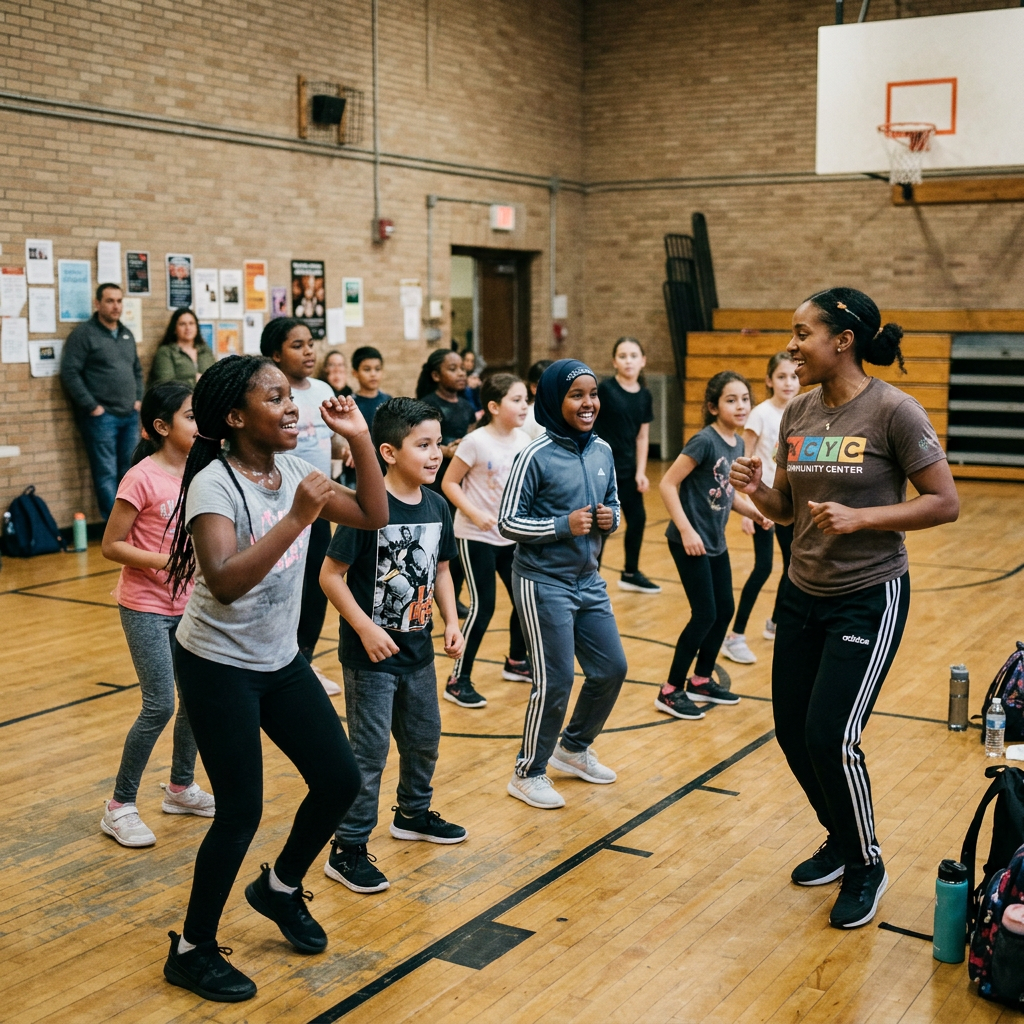
Before Lakayro had a name, its work was already happening. Yvana spent years teaching dance across community centers, schools, churches, and borrowed studios — moving wherever there were young people willing to learn. Each setting taught her something different.
In one community, she met a teenager who had danced at every family gathering but had never been in a formal class. In another, a parent confided that they wanted their child to feel proud of where they came from but could not find a program that reflected it. In schools, she saw students light up the moment they recognized a rhythm from home — and she watched that recognition turn into confidence.
Teaching across these spaces revealed something consistent: the hunger for culturally rooted arts education was everywhere, but the access to it was uneven and often temporary. Programs lived and died by grant cycles. Rehearsal space appeared and disappeared. Families who wanted consistency were left starting over again and again.
The Gap Between Talent and Access
Somewhere along the way, the pattern became impossible to ignore. The young people with the most cultural connection were often the ones with the least access to formal training. Studio tuition was out of reach. Rehearsal space was scarce. And even when programs existed, they rarely centered the traditions these students actually came from.
The barriers were not only financial. They were cultural. A child could grow up surrounded by Haitian and Afro-Diasporic dance at home and still reach adulthood believing those forms were somehow less serious, less worthy, less "real" than the traditions taught in conservatories. That belief is not an accident — it is what happens when a culture is celebrated informally but denied a place to be taught with rigor.
Recognizing those barriers was the moment the work stopped being something Yvana did and became something she had to build.
Building the Home She Wished For
Lakayro — the Haitian Creole word for "home" — was chosen on purpose. The organization was not founded to produce performances. It was founded to create a place. A place where Haitian and Afro-Diasporic dance is taught with depth. Where underserved youth are not an afterthought but the reason the doors open. Where a child can walk in unsure of themselves and grow into someone who carries their culture with pride.
The decision to build it as a nonprofit was deliberate, too. Lakayro was never meant to be a business that serves only those who can pay. It was meant to be a community resource — one that depends on the support of families, donors, partners, and volunteers to keep its doors open and its programs affordable. That structure is not a limitation. It is the point.
The Early Days Were Hard
No nonprofit begins easily, and Lakayro was no exception. The early days were a study in patience and persistence. There was no permanent space, so rehearsals moved between borrowed rooms. There was no guaranteed budget, so programs depended on the generosity of early supporters who believed in the work before there was much to show for it. There was the quiet weight of proving that Haitian and Afro-Diasporic dance deserved a dedicated home at all.
There were also the questions every new organization faces: how to build something sustainable without losing the soul of why it started. How to grow without becoming a service provider that forgets the people it was built for. How to accept help without letting the mission drift toward whoever could fund it.
What carried Lakayro through those early months was not a strategy. It was the community. Parents who registered their children before the company had a studio. Donors who gave before there was a track record. Volunteers who showed up to move chairs and hang flyers. Each of them was betting on something that did not fully exist yet — and that bet is the reason it exists now.
More Than a Studio — a Generational Investment
This fall, Lakayro opens its first permanent rehearsal home in Newark, New Jersey, and welcomes the inaugural generation of its Fall Youth Dance Company. That milestone is real, and it is worth celebrating. But it is also only the beginning.
The vision ahead is bigger than a single season. It is to build a youth dance company that lasts — one that develops not only dancers but mentors, leaders, and cultural stewards. It is to deepen school partnerships so that culturally responsive arts education reaches students who would never otherwise encounter it. It is to expand community workshops, public performances, and mentorship so that Afro-Diasporic culture becomes visible across New Jersey, not just inside one studio.
Most of all, the vision is to make sure that the first generation of Lakayro dancers becomes the foundation others build on — the older dancers future cohorts look up to, the tradition-setters, the ones who prove that a home for culture can be built and can last.
Beyond Dance Instruction
Lakayro teaches dance, but that is not why it exists. It exists to preserve culture in a place where cultures quietly disappear when no one teaches them. It exists to strengthen communities by giving them shared practice — something to gather around that is older and deeper than any single family.
It exists to mentor young people who have talent and history but too few adults who look like them and believe in them. And it exists to create spaces where everyone — regardless of background, income, or experience — feels they belong. A studio can teach a step. Lakayro is building something that teaches a young person who they are.
That is the difference between a class and a home. And it is the reason this work is only beginning.
Be Part of the Story
Lakayro is being built by a community that chose to invest in it early. There is a place in this story for you.